People love to purchase country homes or rural properties in Virginia…. often as an alternative to their previous homes in cities or suburbs. We get it. The sheer beauty of our state, the horse farms, the privacy of large acreage, all combine for very good reasons to purchase country properties. So, in the enthusiasm of choosing possible properties, there is a detail that can be overlooked. Most people want or need internet access in their new homes.
The last thing you want to discover in your new home… is that nobody in your new area has access to the internet.
Below are tools for you to use, to research the various broadband connections for your next Virginia property.
You can look up specific addresses to know in advance what is available before you even look at potential property listings.
 STATE OF VIRGINIA BROADBAND:
The state sponsors an online tool called Commonwealth Connection. Here is INSTRUCTION TO GET AND USE COMMONWEALTH CONNECTION.
After you’ve gotten some search tips, you can look for details of Virginia broadband by looking up specific addresses at THIS SITE TO SEARCH FOR INTERNET ACCESS BY ADDRESS.
 NATIONAL BROADBAND & INTERNET ACCESS:
Nationally, the FCC sponsors a site where you can look up the broadband access anywhere in the country. It will tell you if there’s wireless, DSL, cable, fiber, satellite, or other methods to access broadband at a particular address. You can CLICK HERE FOR AN FCC MAP TO FIND BROADBAND ACCESS ACROSS THE U.S..
In addition, your realtor may provide more details of internet access for each listing as well as advice on local broadband options for properties.

 There are many types of home and property inspections so we’ll deal with two of the main ones in our Charlottesville VA area which are (1) Residential Home/property Inspections and (2) Study Period Inspections (typically for large acreage farm or estate properties). If the buyer is purchasing a large estate or a farm with acreage, that’s when we recommend a Study Period for their inspections, and we’ll talk about that after we finish the standard Home Inspection section of this page.
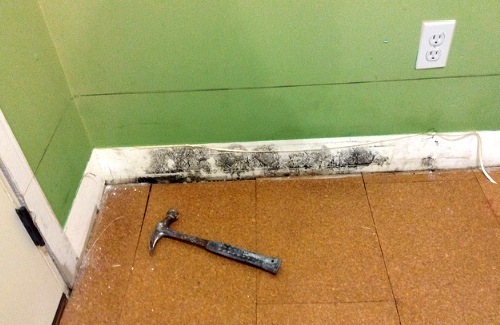 And then there’s the basement or crawl space. If the home has any space underground, the inspector will pay close attention to the basement or crawl space…. even if the basement is finished and furnished. Any sign of dampness or mold is a cause for notation. The possible points for drainage problems are also checked around the exterior of the home (even if there is no sign of dampness inside)…. and details such as the slope of adjacent ground or rainwater drainage will be noted. Drippy exterior faucets are inspected. If any water damage has affected the structural integrity of the exterior steps into the home, they may be suggested for repair. Even sidewalk cracks or irregularities can be noted.
 Both the residential Home Inspection and the Study Period are part of the buying process that we refer to as “due diligence”. Again, it’s important to remember that it’s up to the buyer of real estate in Virginia to verify any claims or statements made by the seller. Buyer beware. This is important. Not all states operate with this legal premise, and often our most experienced real estate purchasers are the ones who’re least able to wrap their minds around this part of our laws. In other states, a seller may not be able to even put his property on the market without providing a guaranteed clear title, but in Virginia a buyer needs to examine and verify all details of the property without relying on information provided by a seller. This period of inspection and verification is what we call “due diligence”. The buyer must perform (often, invest) in research to make sure that the property is able to be sold as it’s claimed, and this may benefit not only the purchaser’s current transaction but also his ability to market this property in the future after his purchase is complete.

 Pam Dent